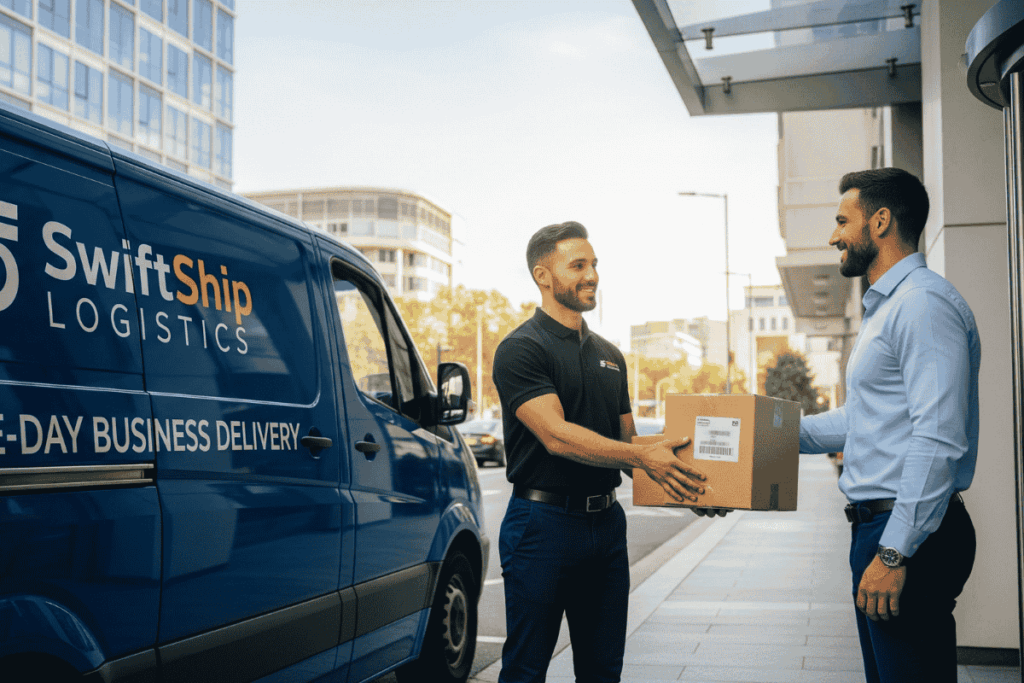
Same-day delivery has become an expectation, even in B2B. Business clients want speed, transparency, reliability, and zero surprises when it comes to pricing.
If you’re managing same-day deliveries, the trick is finding a pricing model that protects your margins while still keeping your clients happy.
Here’s how to do it right.
The Same-Day Delivery for B2B Playbook
Same-day delivery for businesses really needs its own playbooks because B2B clients think differently from everyday consumers.

Businesses often send repeat orders to multiple locations and want to know exactly what it’ll cost every time.
If there are mystery fees or fine print hidden in your B2B Same-Day Delivery services, you will be losing these clients.
It’s a tricky balance to handle, so your pricing must cover those complexities without turning into a spreadsheet maze. It should be simple enough to sell but detailed enough to stay profitable.
Let’s discuss it one step at a time.
Step 1: Know What Every Delivery Really Costs
Before you even think about setting prices for B2B clients, know what your true cost per job actually is (not the projections).
Break it down into parts you can measure:
- Labour: driver time for pickups, waiting, and drop-offs
- Fuel and tolls: these shift daily, so factor in a buffer
- Vehicle costs: lease or finance, tyres, maintenance, insurance
- Tech tools: booking systems, GPS tracking, alerts, integrations
- Packaging: satchels, labels, bubble wrap, tape
- Admin: claims, customer support, invoicing
Once you know your average cost per delivery, you can calculate the cost per kilometre. That gives you a fair baseline for metro versus regional pricing.
Step 2: Map Out Distance, Time, and Location
Not every same-day delivery costs the same. The farther and tighter the window, the higher the price should go.
Set up clear tiers that reflect both effort and urgency.
- Distance: 0 to 10 km, 10 to 25 km, 25 to 50 km, 50+ km
- Time windows: ASAP, 3-hour, or same-day by evening
- Location: CBD congestion, loading zones, or regional access
- After-hours: charge more for nights, weekends, or limited capacity
- Rural: add a per-kilometre rate once outside metro zones
Keep it simple. If you can’t explain your pricing model in one minute, it’s too complicated.
Step 3: Pick the Right Pricing Model
There’s no one-size-fits-all, so choose what suits your customers and workflow.
1. Flat-rate pricing
Offer one fee per order but do so within set limits. This model keeps it easy for clients to understand, and it’s also great for consistent metro deliveries.
But, and this is vital, you have to set clear caps for parcel size, weight, and number of stops! Otherwise, you’ll end up losing money without realising it.
Because remember, not every delivery is equal. One 3-kg parcel to a CBD office is not the same as five oversized boxes going to three different warehouses spread out across town.
So without those limits, a client could technically book one job, but it will cost you the same as three jobs.
2. Tiered pricing
Offer different service levels at different prices. For example, you can let customers choose between 3-hour delivery or same-day delivery by 8 p.m. It monetises urgency while keeping control of capacity.
This model works because it gives both sides flexibility. For customers, they can decide how much speed is worth to them. For your business, you can prioritise resources accordingly.
Bonus: It also helps balance your day. Remember, not every delivery needs to leave immediately. Some can roll into later windows, which will free up time for premium rush jobs that actually pay more.
3. Per-order or per-kilometre
Start by charging a base fee, then add per-kilometre costs for long-distance runs. This keeps regional routes fair for everyone.
It’s simple: distance eats profit.
A flat fee might cover your costs in the city but it will fall short for longer drives whereas a per-kilometre model makes sure you’re paid for the extra fuel, time, and wear on your vehicles.
It’s especially useful when servicing mixed metro and regional areas, where delivery patterns change daily.
4. Volume or subscription models
Offer discounted rates for monthly commitments. This stabilises demand and simplifies billing. Once they exceed their quota, just include a fair overage fee.
These models are great for building long-term relationships with B2B clients because they lock in recurring revenue and give your customers peace of mind about their logistics budget. And the fact that it makes forecasting easier for you is another bonus.
The key is clarity. They should always know what’s included and how much extra deliveries will cost once they go over their plan.
5. Free same-day above a threshold
Include delivery in the product price for large orders. Example: give clients free same-day within 15 km for orders over $250.
This strategy encourages customers to spend more while you cover the cost of delivery in a controlled way. It’s psychology and math working together!

Most shoppers would rather add a small item to hit free delivery than pay a separate fee. As long as your threshold is high enough to protect your margin, it’s a smart move.
6. Dynamic pricing
You should also adjust rates for peak hours, bad weather and even heavy traffic. BUT! Be upfront about it. You don’t want a lack of transparency to make customers feel cheated.
Don’t skip this step, because dynamic pricing protects your business when things get unpredictable.
Let’s say the demand spikes, or bad weather delays your couriers. Or traffic is so bad on a particular day that it doubles delivery times
Simply adjust pricing to stay profitable without cutting service quality. The key is communication, though. Always let customers know why a price is higher in that moment.
Most are fine with it as long as it feels fair and honest.
Step 4: Add Value That Clients Notice
You don’t have to drop prices to compete. Add value instead. Sounds simple but it’s true.
Offer service guarantees, faster support channels, or photo proof of delivery. Give clients live tracking links and clear ETAs.
If you have VIP clients, perhaps consider a dedicated driver or loyalty credits, or some perk that covers their same-day deliveries each month.
These touches justify premium pricing.
Step 5: Be Crystal Clear About Costs
A hard truth no one wants to hear: confusion kills trust. So, be very clear about everything. And I mean everything.
Publish your delivery zones, cut-off times, and surcharges and make sure it’s easily accessible on your site and during the checkout process.
Be absolutely clear about what’s included and what costs extra. And why. Justify the costs to your customer.
If clients can get instant quotes through your website or API, even better. It stops invoice disputes before they happen.
Example Pricing Frameworks You Can Steal
If you’re not sure what to include in the pricing or the special delivery offers, take some inspiration from the ideas below.
Starter Plan (Pay-as-you-go)
- Same-day by 8 pm flat rate up to 10 km
- 3-hour rush: +25%
- After-hours or weekend: +15%
- Oversized parcels: fixed surcharge
Growth Plan (Commit and Save)
- Monthly minimum (for example, 120 deliveries) with a 12% discount
- Includes live tracking and photo proof of delivery
- Overage billed at regular pay-as-you-go rates
Enterprise Plan (Subscription + SLA)
- Fixed monthly fee for a set number of deliveries
- Priority dispatch and dedicated support
- Custom SLAs and quarterly performance reviews
The Tech That Makes It All Work
This is where it can all fall apart if you’re not careful…. I’ll bold this so it stands out: Pricing only works when your tech supports it.
You need live tracking, automated quotes, and accurate delivery data to know what’s working and what’s not.
- GPS visibility helps you prevent missed deliveries
- Real-time tracking alerts reduce customer calls
- Analytics reveal which routes or clients drive profit
If you need a trusted courier partner in Australia, Zoom2u connects businesses to a network of trusted couriers nationwide.
It handles 3-hour delivery, same-day deliveries, and weekend deliveries with full tracking and no hidden fees. It’s one of the highest-rated courier platforms in Australia, with over two million completed deliveries.
If you have your own fleet of drivers, you can still use the tech Zoom2u is built on. With Locate2u, you can plan routes, track drivers, and manage proof of delivery in real time.
Same-Day Delivery for B2B: FAQs
What’s the fastest way to deliver a parcel in Australia?
Use an on-demand courier with a direct-drive or 3-hour option. Zoom2u can get a driver on the job within minutes.
How do I protect my margins?
Calculate every cost, price by distance and urgency, and use dynamic pricing to handle peaks. Offer free delivery only above a threshold that offsets the cost.
Should I offer free same-day delivery?
Yes, but only strategically. Tie it to loyalty or higher-order values. Keep a transparent flat fee for smaller jobs.
How should I price regional areas?
Use zone-based pricing with a clear per-kilometre rate beyond metro zones. Be honest about delivery times and surcharges.
Which KPIs should I track?
On-time rate, cost per kilometre, customer satisfaction, and redelivery rates. Watch how many rush orders clients choose and how that affects your margins.
Same-Day Delivery for B2B: The Bottom Line
You don’t have to lose money to offer same-day delivery. You just need a pricing model that balances cost, value, and transparency.
Set clear rules, use the right tech, and communicate like a human. That’s how you keep clients loyal and profitable at the same time.
Need help moving faster? Book a same-day courier with Zoom2u.
Or if you manage your own fleet, use Locate2u to optimise routes and hit every deadline.